AI image model · MiniMax
MiniMax-H3-Image, Explained: 4K Speed, License, Access

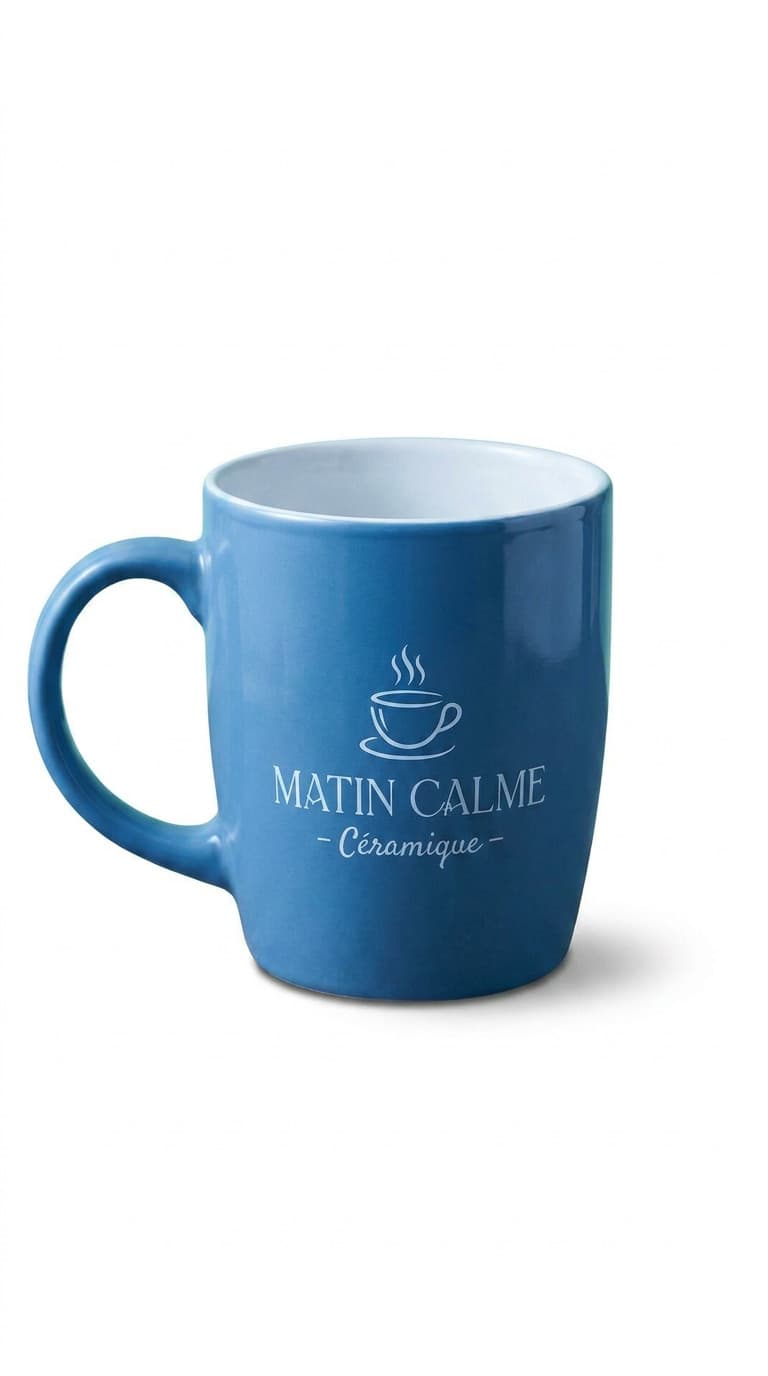 Product photo
MiniMax-H3-Image is MiniMax's open-weight image generation and editing model, released in November 2026 with 16-megapixel output and up to 16 reference images; this page covers what it is, what the license allows and what it costs. Need product visuals today at a flat price? Supavisual's own generator costs 1 credit per image.
- Supavisual: 3 free trial credits
- 1 credit per image, any tool
- Transparent cutouts included
- Parameters in its diffusion transformer
- 33.1B
- Native output, 4096 × 4096 at 1:1
- 16 MP
- Reference images per edit request
- 16
- Per image on Supavisual's own generator
- 1 credit
01
What is MiniMax-H3-Image?
MiniMax-H3-Image is an image model from MiniMax, the AI company behind the Hailuo AI app. MiniMax announced it on November 11, 2026 as an open-weight model built on H3, the video-and-audio model it opened in July. One MiniMax-H3-Image checkpoint handles text-to-image, reference-based generation and editing. You'll see it written as MiniMax-H3-Image on Hugging Face, MiniMax H3-Image in the launch post and MiniMax H3 Image in the site menu.
The pitch is detail without the wait. MiniMax-H3-Image renders about 16 megapixels at every aspect ratio, from 4096 × 4096 to 6272 × 2688, without an upscaler, and MiniMax says a full 4K image takes under 10 seconds. MiniMax-H3-Image is distilled to 6 sampling steps with no classifier-free guidance.
MiniMax also claims state-of-the-art prompt adherence among open-weight models. It published no quality benchmark scores to back that, only a latency chart.
02
MiniMax H3-Image features
What MiniMax's model card, launch post and API guide list for this release.
16 MP output
Best results land around 16 MP; the working range is about 4 to 20 MP. Common sizes include 4736 × 3552 (4:3), 5472 × 3072 (16:9) and 6272 × 2688 (21:9).
Up to 16 references
MiniMax-H3-Image edits accept 1 to 16 reference images, cited as Picture 1, Picture 2 and so on. One demo furnishes an empty room from ten references.
6-step sampling
Self-hosted MiniMax-H3-Image accepts only 6 steps and no guidance; other values return an error.
Prompt expansion
MiniMax-H3-Image expects a long English description. The API rewrites short prompts in any language first; a 27B prompt expander can run locally.
Text and diagrams
MiniMax-H3-Image showcases include infographics, exploded product views, CAD-style drawings and logic puzzles solved on the board in Chinese and English.
Two API speeds
MiniMax-H3-Image-Highspeed takes the same parameters as Standard and costs twice as much per image token in exchange for lower latency.
03
MiniMax-H3-Image specs
What MiniMax has published for MiniMax-H3-Image as of November 2026; anything unpublished is left out.
- Maker
- MiniMax
- Announced
- November 11, 2026 (license dated November 10)
- Tasks
- Text-to-image, reference-based generation, image editing
- Architecture
- 33.1B dense single-stream DiT, 50 layers, H3's text encoder
- Download size
- 66.28 GB transformer + 2.34 GB VAE; 66.7 GB text encoder from the H3 repo
- API output
- 655,360 to 20,000,000 px, ratios 1:3 to 3:1, 1–10 images, JPEG/PNG/WebP
- Not supported (API)
- Masked edits, preview images, transparent backgrounds
- Weights
- Open, under the MiniMax-H3-Image Community License
- Alternative: Supavisual's generator
- Prompt plus up to 6 references, 1–4 images, 5 aspect ratios, 1 credit each
04
Is MiniMax-H3-Image open source? Read the license first
The weights are free to download, but MiniMax-H3-Image is not open source in the usual sense. It ships under the MiniMax-H3-Image Community License, and that license is limited to an "Applicable Territory" that excludes the European Union, the United Kingdom, South Korea and the United States. Using MiniMax-H3-Image weights or outputs outside that territory is not authorized; MiniMax invites people there to ask about a separate license.
Inside the territory, three more rules matter for business use:
- A separate written authorization is required if your annual revenue tops $1 million or if you offer the model to others as a hosted service.
- Commercial products must display "MiniMax-H3-Image" in their interface.
- Outputs may not be used to improve any other AI model.
MiniMax claims no rights over the images you generate. Its acceptable-use policy also asks you to disclose machine-generated content when you publish it. The license covers the downloadable weights; MiniMax API customers should check the platform's own terms.
05
MiniMax H3 image API pricing
MiniMax bills MiniMax-H3-Image by token and publishes example per-image costs. Figures as of November 2026, in US dollars.
| Task | Standard | Highspeed |
|---|---|---|
| Text-to-image, 1K (1024 × 1024) | $0.02179 | $0.03529 |
| Text-to-image, 2K (2048 × 2048) | $0.02333 | $0.03622 |
| Text-to-image, 4K (4096 × 4096) | $0.06879 ($0.03439 on launch offer) | $0.13001 ($0.06501 on launch offer) |
| Edit, 1 reference, 2K output | $0.02658 | $0.04576 |
| Edit, 3 references, 4K output | $0.07914 ($0.03957 on launch offer) | $0.15407 ($0.07703 on launch offer) |
| Token rates per 1M (text in / image in / image out) | $2.30 / $1.50 / $3.80 | $2.30 / $3.00 / $7.60 |
MiniMax calls these illustrative: real charges depend on prompt tokens, including those added by prompt enhancement. The 50% launch offer covers images of at least 16.6 million pixels until November 17, 2026, 16:00 UTC.
06
How fast is MiniMax-H3-Image? MiniMax's own numbers
MiniMax's latency chart reports median (P50) times it measured itself, so treat them as vendor figures. For MiniMax-H3-Image text-to-image at 4K, it lists 16.0 seconds for Standard and 10.3 seconds for Highspeed, against 50 to 51 seconds for Nano Banana 2.1. That chart sits slightly above the "under 10 seconds" headline in the launch post, and MiniMax does not say which setup produced the headline figure.
At 1K the gap narrows: MiniMax lists 10.6 seconds for Standard, 7.7 for Highspeed and 9.0 for GPT Image 2.6 at medium quality. For edits with three references at 4K, it lists 21.4 and 14.4 seconds. Overall, MiniMax says Standard runs 1.5 to 2 times as fast as mainstream rivals and Highspeed 3 to 4 times, at 50 to 70 percent of their price. MiniMax cites no independent benchmark for these figures.
07
How to use MiniMax-H3-Image and the H3 image API
There are four ways in. Hailuo AI, MiniMax's consumer app, lists H3 Image in its image creator; cost depends on your Hailuo plan. MiniMax Code, its agent app, offers it too, and MiniMax runs a Hugging Face demo. Developers call MiniMax-H3-Image through the MiniMax API at /v1/images/generations and /v1/images/edits, which default to 4K output and rewrite your prompt first; text-to-image can skip that with disable_prompt_enhanced, edits cannot.
To self-host MiniMax-H3-Image, download the repository plus the H3 text encoder, roughly 135 GB together, and serve it with SGLang, vLLM-Omni, Diffusers, LightX2V or ComfyUI. Supported accelerators include NVIDIA H200, RTX PRO 6000 Blackwell and AMD MI350X. Expand short prompts first to match API quality.
08
MiniMax-H3-Image limits and how to work around them
MiniMax-H3-Image is strong on resolution and references. These are the gaps to plan for.
Do
- Check the license territory before deploying the weights
- Write long, specific English prompts when self-hosting
- Proofread every word of on-image text at full size
- Budget for the 4K default once the launch discount ends
Don't
- Expect transparent PNGs or masked edits from the API
- Treat the vendor latency chart as an independent benchmark
- Run a hosted service on the weights without MiniMax's authorization
- Train another model on its outputs
09
A MiniMax-H3-Image alternative for product and marketing visuals
Supavisual does not run MiniMax-H3-Image. It is a separate tool with its own generator, built for brands and online stores that need finished assets rather than raw generations. In the generator you write a prompt, attach up to 6 reference images, pick one of 5 aspect ratios and get up to 4 images per run, at 1 credit each.
It also covers what the H3 image API leaves out. The editor removes a background for a transparent cutout and handles prompt edits, generative fill, upscaling and expanding. Product studio and templates restyle one product photo for many scenes, and batch applies one edit to up to 10,000 images.
Hobbyist is $19 a month for 800 credits, about 2.4 cents an image, with a $9 first month. Unlimited is $99 per seat per month. Both include a commercial license, and new accounts get 3 trial credits with watermarked previews.
10
MiniMax H3 Image vs GPT Image 2.6, Nano Banana 2.1, Seedream 5.5 and Ideogram 4.0
How MiniMax's model compares with the other new image models. Each has its own page.
| Feature | MiniMax-H3-Image | GPT Image 2.6 | Nano Banana 2.1 | Seedream 5.5 | Ideogram 4.0 |
|---|---|---|---|---|---|
| Made by | MiniMax | OpenAI | ByteDance | Ideogram | |
| Stand-out feature | 16 MP, 16 references | SVG and GIF output | 14 references, 4K | Multi-turn edits, RGBA | Layout boxes |
| Weights | Open (territory-limited license) | Hosted only | Hosted only | Hosted only | Open (non-commercial) |
| Published API price | From $0.02179 per 1K image | $30 / 1M output tokens | $0.0336 per 1K image | Not listed by ByteDance | $0.03–$0.10 per image |
Prices as of November 2026. Read more: GPT Image 2.6, Nano Banana 2.1, Seedream 5.5, Ideogram 4.0.
11
More models and Supavisual tools
Other model explainers and the tools that turn one product photo into a full set of visuals.
 GPT Image 2.6OpenAI's November 2026 image model: Sunburst and Flare, GIF and SVG output, API pricing and limits.
 Nano Banana 2.1Google's October 2026 Flash image model: specs, per-image API prices, limits and what Reddit thinks.
 Seedream 5.5ByteDance Seed's newest image model: multi-turn editing, transparent layers, lifelike texture and where to try it.
 Ideogram 4.0Ideogram's first open-weight text-to-image model: specs, license terms, API and app pricing.
12
Frequently asked questions
What is MiniMax-H3-Image?
It is MiniMax's open-weight image generation and editing model, announced on November 11, 2026 and built on its H3 model. One 33.1B-parameter checkpoint does text-to-image and editing with up to 16 reference images, and outputs about 16 megapixels, such as 4096 × 4096, without an upscaler. It runs on MiniMax's API, Hailuo AI and MiniMax Code, or on your own GPUs.
Is MiniMax-H3-Image free?
MiniMax-H3-Image weights cost nothing to download, and MiniMax runs a demo on Hugging Face, but running it yourself takes about 135 GB of files and data-center GPUs. On the MiniMax API a 2K text-to-image example costs about $0.023, and Hailuo AI pricing depends on your plan. For product images, Supavisual gives new accounts 3 free trial credits with watermarked previews.
Can I use MiniMax H3-Image in the US or the EU?
Not under the community license for the weights. It applies only to an Applicable Territory that excludes the European Union, the United Kingdom, South Korea and the United States, and use outside that territory is not authorized. MiniMax says people in those regions can contact it about a separate license. API access is governed by MiniMax's platform terms, so check those separately.
Can I use MiniMax-H3-Image commercially?
Within the licensed territory, yes, with conditions. You need MiniMax's prior written authorization if your annual revenue exceeds $1 million or if you offer the model to others as a hosted service. Commercial products must show "MiniMax-H3-Image" in their interface, and outputs can't be used to train other AI models. MiniMax claims no rights over the images you generate.
How much does the MiniMax H3 image API cost?
MiniMax bills Standard at $2.30 per million text-input tokens, $1.50 per million image-input tokens and $3.80 per million image-output tokens; Highspeed doubles the image rates. Its examples work out to about $0.022 for a 1K image, $0.023 for 2K and $0.069 for 4K, with 4K at half price until November 17, 2026. Prompt length changes the real total.
Can MiniMax-H3-Image make transparent PNGs?
No. The MiniMax-H3-Image API guide lists transparent backgrounds, masked edits and preview images as not supported. It outputs JPEG by default, or PNG and WebP on request, always on an opaque background. If you need a product cutout, Supavisual's editor removes the background from a generated or uploaded image for 1 credit, leaving a transparent cutout.
Does Supavisual use MiniMax-H3-Image?
No. Supavisual is an independent tool with its own generator and does not offer MiniMax's image model. It is built for product and marketing visuals: generate from a prompt and references, then remove backgrounds, edit, upscale, resize and translate on-image text, at 1 credit per image. Hobbyist is $19 a month for 800 credits, and new accounts get 3 trial credits.
Try a MiniMax-H3-Image alternative on your own product
Read up on MiniMax-H3-Image, then see what Supavisual makes from your prompt or product photo: 1 credit per image, 3 free trial credits to start.
Generate an imageMore ai image models: see all.